Rural Wastewater Management
We support state governments to improve rural wastewater management through context-specific technical planning, local capacity building, and phase-wise implementation.
We support state governments to improve rural wastewater management through context-specific technical planning, local capacity building, and phase-wise implementation.
Our villages still lack safe and planned systems to manage wastewater. All households and institutions are not connected to drains leading to water stagnation in roads.

Solid waste, including animal carcasses, flow into stormwater drains

Storm water drains are used for liquid waste conveyance
Drains not properly planned and lead to stagnation and ponding

Wastewater is discharged into open land or water bodies
Our programs impact change at an ecosystem level - from grassroots to policy making.
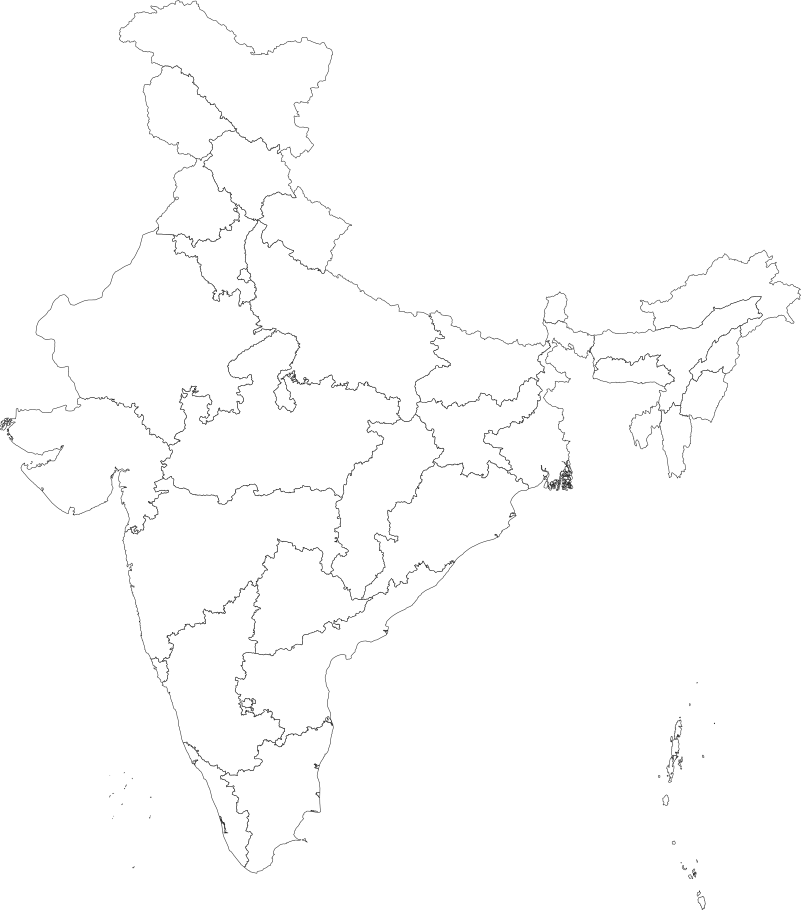
Villages in Himachal Pradesh, Punjab and Haryana received support for greywater management plans
Water bodies better protected with plans for Liquid Waste Treatment Systems in Punjab and Haryana
Government officials, technical team personnel trained on Liquid Waste Management
village meetings conducted on Liquid Waste Water management
have developed state-level technical strategies
made aware of water management, sanitation, and hygiene services
We design village-level technical strategies suited to unique contexts — be it high septic tank density or difficult terrain. While creating standard technical interventions for various Gray Water Management (GWM) issues, we ensure suitability across diverse geographies.
We empower local personnel through intensive, hands-on training for data-driven planning exercises. By building local capacity in using data collection tools, we ensure ownership, accuracy, and sustainability in decision-making.
We implement solutions through a structured, phase-wise plan that allows for adaptive learning and contextual fine-tuning. This approach ensures smoother roll-out, better resource coordination, and long-term functionality of GWM systems.
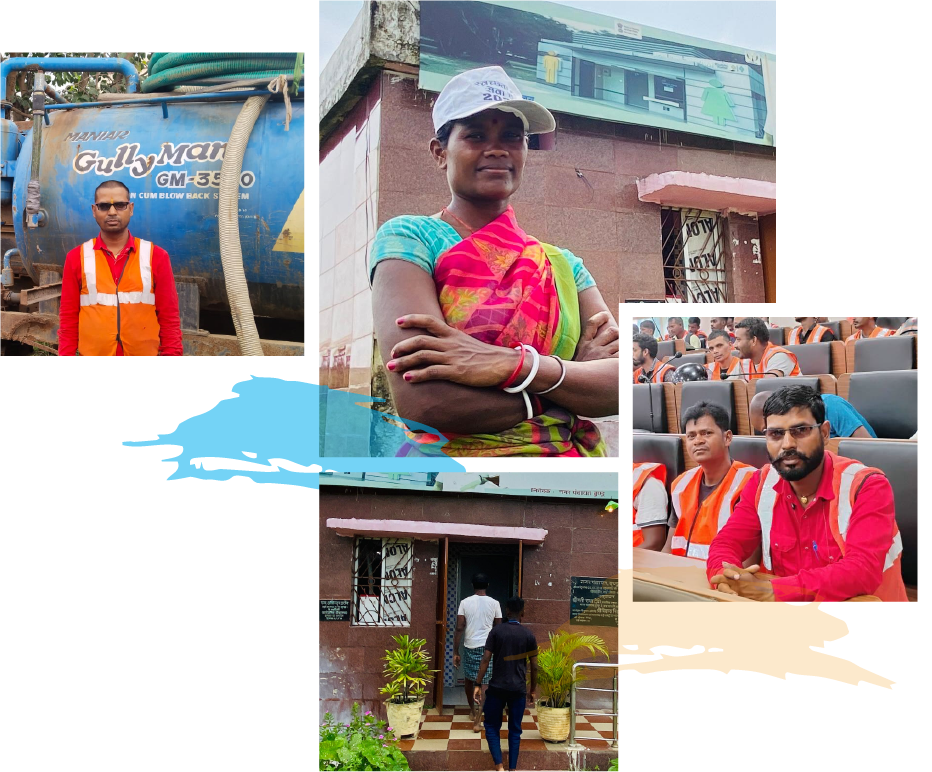
How we helped improve sanitation infrastructure along the Ganga riverfront, combining heritage preservation with modern sanitation solutions.
Implementation of a digitally monitored fecal sludge management system in an urban center, creating a model for other municipalities.
Join our mission to transform rural wastewater management across India. Whether you're a government entity, donor organization, or implementation partner, we're ready to collaborate.
Support our Rural Wastewater Program with funding that creates lasting impact.
Bring our expertise to your municipality to improve rural wastewater systems.
Partner with us on research, implementation, or technology development.
Yes. We design village, or district-specific interventions based on terrain, housing patterns, and sanitation profiles. Projects can include technical planning, community training, and phased infrastructure development.
We train local officials, build capacity within Gram Panchayats, and embed planning tools in state systems. This helps ensure the village continues to maintain and upgrade its system independently.
Yes. We offer a library of standard technical drawings for GWM structures (such as soak pits, leach pits, and DEWATS), adaptable to population size and site conditions.
Absolutely. We conduct hands-on training sessions using data tools, planning templates, and participatory methods to help local staff prepare implementable greywater management plans.
Our work focuses on tackling open discharge of greywater, misuse of storm drains, clogged or broken drains, and lack of safe disposal—issues often overlooked in rural sanitation.
Yes. We welcome technical and funding partnerships to design scalable models, especially in aspirational districts or low-resource areas with high public health risk.
We monitor outcomes like number of Liquid Waste Management – Village Action Plans developed, wastewater treatment assets proposed and constructed, budget allocated by government for development of proposed treatment systems, construction of treatment systems, no. of rural households & institutions benefitted, no. of waterbodies protected, drains improved, quantity of greywater treated and safely disposed, technical officials and field staff trained, village meetings conducted, rural population made aware—reported through clear metrics and dashboards.
Partner contributions are acknowledged in reports, case studies, learning materials, and joint field visits. Co-branded visibility is also provided at national/state learning events.